NexiumResearch - Glossary - Definitions
Some words have many meanings. A term will refer the reader to another definition only when the second definition gives additional information about a topic that is directly related to the first term.
All Definitions I - P
All Definitions Q - Z
All Definitions A - H
A B C D E F G H
A
Abdomen
Pronounced - AB-doh-men
The area between your chest and your hips in the front of your body. Contains the stomach, small intestine, large intestine, liver, gallbladder, pancreas, and spleen.
Accessory Digestive Organs
Pronounced - ak-SES-uh-ree dy-JES-tiv or-gunz
Organs that help with digestion but are not part of the digestive tract. These organs are the tongue, glands in the mouth that make saliva, pancreas, liver, and gallbladder.
Achalasia
Pronounced - AK-uh-LAYZ-ya
A rare disorder of the esophagus. The muscle at the end of the esophagus does not relax enough for the passage to open properly. Esophagus (pronounced - eh-SAW-fuh-gus), also spelled oesophagus, is the organ that connects the mouth to the stomach. Also called gullet.
Achlorhydria
Pronounced - AY-klor-HY-dree-uh
A lack of hydrochloric acid in stomach juice.
Activated Charcoal
Pronounced - AK-tuh-vay-ted CHAR-kohl
An over-the-counter product that may help relieve intestinal gas.
Acute
Pronounced - uh-KYOOT
Symptoms or signs that begin and worsen quickly; abrupt, sharp and brief.
Adenocarcinoma
Pronounced - AD-in-o-kar-sin-O-ma
Cancer that begins in cells that line certain internal organs and that have glandular (secretory) properties.
Aerophagia
Pronounced - AIR-oh-FAY-jee-uh
A condition that occurs when a person swallows too much air. Causes gas and frequent belching.
Aetiological
Causing or contributing to the cause of a disease or condition.
Alactasia
Pronounced - ay-lak-TAYZ-ya
An inherited condition causing the lack of the enzyme needed to digest milk sugar.
Alagille Syndrome
Pronounced - al-uh-GEEL sin-drohm
A condition of babies in their first year. The bile ducts in the liver disappear, and the bile ducts outside the liver get very narrow. May lead to a buildup of bile in the liver and damage to liver cells and other organs.
Ameliorate
To make something better or become better, improve.
Amino Acid
Any of a class of 20 molecules that are combined to form proteins in living things. The sequence of amino acids in a protein and hence protein function are determined by the genetic code.
Back To Top
osis
Proteins are important building blocks for all body parts, including muscles, bones, hair, and nails. Proteins circulate throughout the body in the blood and are normally harmless. Occasionally, cells produce abnormal proteins that can settle in body tissue, forming deposits and causing disease. When these deposits of abnormal proteins were first discovered, they were called , and the disease process osis.
In recent years, researchers have discovered that different kinds of proteins can form deposits and have identified several types of osis. Two of these types are closely related to kidney disease. In primary osis, abnormal protein production occurs as a first step and can lead to kidney disease. Dialysis related osis (DRA), on the other hand, is a result of kidney disease. More about osis
Analgesic
A drug's ability to relieve pain, or a drug that alleviates pain. The term comes from the Greek word algos, which means pain.
Anemia
Pronounced - uh-NEE-mee-uh
Not enough red blood, red blood cells, or hemoglobin (pronounced - HEE-muh-gloh-bin) in the body. Hemoglobin is a protein in the blood that contains iron.
Anti-Inflammatory
Pronounced - AN-tee-in-FLAM-uh-toh-ree
Preventing or reducing inflammation.
Antibiotic
Pronounced - an-ty-by-ah-tik
An antibiotic is a drug used to fight many infections caused by bacteria. Some antibiotics are effective against only certain types of bacteria, which are called Narrow-Spectrum Antibiotics. Other antibiotics can effectively fight a wide range of bacteria, which are called Broad-Spectrum Antibiotics.
Antibiotics are a substance produced by bacteria or fungi that destroys or prevents the growth of other bacteria and fungi. Antibiotics fight bacterial infections by killing bacteria or stopping it from growing. Antibiotics are not effective against viruses, like colds and flu. It may surprise you to know that they also do not work on most ear infections and bronchitis.
Antibiotics can help your body's immune system fight off infections. If you have ever had strep throat, your doctor probably gave you an antibiotic drug to take. Remember, only take antibiotic drugs when they are prescribed by your health care provider. Taking them when they are not needed can create stronger germs, like MRSA. And if you get a prescription drug from your doctor, always finsih the whole bottle, (unless your doctor tells you to stop taking it) the last few pills kill the toughest germs. Do not save antibiotics for later use. Do not use someone else's antibiotics, or give your antibiotics to someone else.
Antibody
Proteins made by the immune system that bind to structures (antigens) they recognize as foreign to the body.
Antigen
A structure foreign to the body, such as a virus. The body usually responds to antigens by producing antibodies.
Antipyretic
A drug's ability to reduce fever. The term comes from the Greek word pyresis, which means fire.
Anus
Pronounced - AY-nus
The opening at the end of the large intestine. Stool leaves the body through this opening.
Apathy
A lack of emotion or interest, without feeling.
Appendix
Pronounced - uh-PEN-diks
A 4 inch pouch attached to the first part of the large intestine (cecum). No one knows what function the appendix has, if any.
Ascites
Pronounced - uh-SY-teez
A buildup of fluid in the abdomen. The abdomen is the area between your chest and your hips in the front of your body.
Asthma
Pronounced - AZ-muh
A chronic (lasting for a long period of time) respiratory disease, often arising from allergies, that is characterized by sudden recurring attacks of labored breathing, chest constriction, and coughing.
Asymptomatic
Presenting no symptoms of disease.
Ataxia
A condition in which the muscles fail to function in a coordinated manner. More about Ataxia
Atrophy
The partial or complete wasting away of a part of the body. Causes of atrophy include poor circulation, loss of hormonal support to the organ, loss of nerve supply, poor nourishment, disuse, disease, lack of exercise, or aging. For example, muscle atrophy is the condition resulting from reduced muscle mass which is due to disuse of the muscles.
Autoimmune
Pronounced - AW-toh-im-YOON
A term that refers to a person's immune system attacking his or her own body.
Autoimmune Disease
A disease in which the body's defense system malfunctions and attacks a part of the body itself rather than foreign matter.
Autoimmune Hepatitis
Autoimmune hepatitis is inflammation of the liver caused by immune cells that mistake the liver's normal cells as harmful invaders. More about Autoimmune Hepatitis
Back To Top
B
Bacteria
Pronounced - bak-TEER-ee-uh
Bacteria is plural for bacterium. Bacteria is tiny microorganisms that reproduce by cell division and usually have a cell wall. Bacteria can be shaped like a sphere, rod, or spiral and can be found in virtually any environment and range from the harmless and beneficial bacteria to the bacteria that can casue infections and disease in animals and humans.
Bacterial
Bacterial is an adjective of bacterium. Bacteria is plural (consisiting of more than one) for bacterium. Bacteria is tiny microorganisms that reproduce by cell division and usually have a cell wall. Bacteria can be shaped like a sphere, rod, or spiral and can be found in virtually any environment and range from the harmless and beneficial bacteria to the bacteria that can casue infections and disease in animals and humans.
Barium
Pronounced - BAIR-ee-um
A chalky liquid used to coat the inside of organs so that they will show up on an x-ray.
Barrett's Esophagus
BAH-ruts eh-SAW-fuh-gus
A condition in which the cells lining the lower part of the esophagus have changed or been replaced with abnormal cells that could lead to cancer of the esophagus. The backing up of stomach contents (reflux) may irritate the esophagus and, over time, cause Barrett's esophagus. More about Barrett's Esophagus
Benign
Pronounced - beh-NINE
Not cancerous. Benign tumors do not spread to tissues around them or to other parts of the body.
Bile
Pronounced - BY-ul
Fluid made by the liver and stored in the gallbladder. Bile helps break down fats and gets rid of wastes in the body.
Biliary atresia
Pronounced - BILL-ee-air-ee uh-TREEZ-ya
A condition that results when the bile ducts inside or outside the liver don't have normal openings. Bile becomes trapped in the liver, causing jaundice and cirrhosis. This condition is present from birth and without surgery may cause death. More about Biliary Atresia.
Bilirubin
Pronounced - BILL-ee-ROO-bin
The substance formed when hemoglobin breaks down. Bilirubin gives bile its color. Bilirubin is normally passed in stool. Too much bilirubin causes jaundice.
Biopsy
Pronounced - BY-op-see
The removal of cells or tissues for examination under a microscope. When only a sample of tissue is removed, the procedure is called an incisional biopsy or core biopsy. When an entire lump or suspicious area is removed, the procedure is called an excisional biopsy. When a sample of tissue or fluid is removed with a needle, the procedure is called a needle biopsy or fine needle aspiration.
Bladder
The balloon shaped organ inside the pelvis that holds urine.
Blood/Brain Barrier
A membrane that controls the passage of substances from the blood into the central nervous system.
Body Mass Index (BMI)
Body Mass Index (BMI) is a reliable indicator of total body fat, which is related to the risk of disease and death. BMI is a measure of body weight relative to height. BMI is a tool that is often used to determine if a person is at a healthy weight, overweight, or obese, and whether a person's health is at risk due to his or her weight. Body Mass Index Calculator & Chart.
Bone Marrow
Pronounced - bone MAYR-oh
The soft, sponge-like tissue in the center of most bones. It produces white blood cells, red blood cells, and platelets.
Bowel
Pronounced - BAH-wul
The long, tube-shaped organ in the abdomen that completes the process of digestion. Bowel is another word for the small intestine and the large intestine.
Bowel Incontinence
Bowel incontinence, also called fecal incontinence, is the inability to control your bowels. When you feel the urge to have a bowel movement, you may not be able to hold it until you get to the bathroom. Or, stool may leak from the rectum unexpectedly, sometimes while passing flatulence (gas). More about Bowel Incontinence.
Bronchoscope
Pronounced - BRON-ko-skope
A thin, lighted tube used to examine the inside of the trachea and bronchi, the air passages that lead to the lungs.
Back To Top
C
Cancer
A term for diseases in which abnormal cells divide without control. Cancer cells can invade nearby tissues and can spread through the bloodstream and lymphatic system to other parts of the body.
Candidiasis
Pronounced - KAN-di-DY-uh-sis
A mild infection caused by the Candida (pronounced - KAN-di-duh) fungus, which lives naturally in the gastrointestinal (GI) tract. Infection occurs when a change in the body, such as surgery, causes the fungus to overgrow suddenly.
Carcinoma
Cancer that begins in the skin or in tissues that line or cover body organs.
Cartilage
Pronounced - KAR-tih-lij
A tough, flexible tissue that lines joints and gives structure to the nose, ears, larynx, and other parts of the body.
CAT (or CT) scan
Computed tomography scan. A series of detailed pictures of areas inside the body taken from different angles; the pictures are created by a computer linked to an x-ray machine. Also called computerized tomography and computerized axial tomography (CAT) scan.
Cecum
Pronounced - SEEK-um
The beginning of the large intestine. The cecum is connected to the lower part of the small intestine, called the ileum.
Celiac Disease
Pronounced - SEL-ee-ak duh-zeez
Celiac disease is a digestive disease that damages the small intestine and interferes with absorption of nutrients from food. People who have celiac disease cannot tolerate a protein called gluten, found in wheat, rye, and barley. Gluten is found mainly in foods but may also be found in products we use every day, such as stamp and envelope adhesive, medicines, and vitamins. More about Celiac Disease
Cerebrospinal Fluid
The colorless liquid, consisting partially of substances filtered from blood and partially by secretions released by brain cells, that circulates around and through the cavities of the brain and spinal cord. Physicians use a variety of tests - electrophoresis, isoelectric focusing, capillary isotachophoresis, and radioimmunoassay - to study cerebrospinal fluid for abnormalities often associated with MS.
Chemotherapy
Pronounced - kee-mo-THER-a-pee
Treatment with anticancer drugs.
Back To Top
Chronic
Pronounced - KRAW-nik
Chronic is a term that refers to disorders that last a long time, often years. A chronic condition is one lasting 3 months or more, by the definition of the U.S. National Center for Health Statistics.
Cirrhosis
Pronounced - suh-ROH-sis
Cirrhosis is a disease characterized by scarring of the liver, causing fibrosis and nodular regeneration. Cirrhosis makes it hard for the liver to remove poisons (toxins) like alcohol and drugs from the blood. These toxins build up in the blood and may affect brain function. Cirrhosis is a serious condition. More about Cirrhosis.
 
Clinical Trials
A type of research study that tests how well new medical treatments or other interventions work in people. Such studies test new methods of screening, prevention, diagnosis, or treatment of a disease. The study may be carried out in a clinic or other medical facility. Also called a clinical study.
Colectomy
Pronounced - koh-LEK-toh-mee
An operation to remove all or part of the colon. The colon is also called the large intestine.
Colitis
Pronounced - koh-LY-tis
Irritation of the colon.
Colon
Pronounced - KOH-lun
The part of the digestive system that stores stool. Also called large intestine.
Colonoscope
A flexible, lighted instrument with a built-in tiny camera used to view the inside of the entire colon and rectum.
Colorectal
Related to the colon, rectum, or both.
Colonoscopy
Pronounced - KOH-lon-OSS-kuh-pee
A test to look into the rectum and colon (the colon is also called the large intestine. The doctor uses a long, flexible, narrow tube with a light and tiny lens on the end. This tube is called a colonoscope.
Colostomy
Pronounced - koh-LAW-stuh-mee
A colostomy is a surgery where the doctor leaves part of the healthy large intestine and connects that to a hole in the abdomen. This hole is called a stoma.
Congenital
A condition that is congenital is one that is present at birth.
Constipation
Pronounced - KON-stih-PAY-shuhn
The passage of small amounts of hard, dry bowel movements, usually fewer than three times a week. What is Constipation?
Cricoid Cartilage
Pronounced - kri-koid KAR-tih-lij
The small thick cartilage that forms the lower and posterior parts of the laryngeal wall. The cricoid cartilage is about one inch down the neck from a persons adam's apple (thyroid cartilage). The indentation between the two is the cricothyroid membrane.
Cricopharyngeal
Of or relating to the cricoid cartilage and the pharynx.
Crohn's Disease
Pronounced - krohnz duh-zeez
A chronic (lasting a long time) form of inflammatory bowel disease. Crohn's disease causes severe irritation in the gastrointestinal (GI) tract. It usually affects the lower small intestine (called the ileum) or the colon, but it can affect the entire gastrointestinal tract. Also called regional enteritis and ileitis. More about Crohn's Disease
Cytokine
Pronounced - SY-toh-kine
A powerful chemical substance secreted by T cells. Cytokines can also be produced in the laboratory by recombinant DNA technology and given to people to affect immune responses. Cytokines are an important factor in the production of inflammation and show promise as treatments for MS.
Back To Top
D
Dehydration
Pronounced - DEE-hy-DRAY-shuhn
Excessive loss of water from the body or from an organ or body part, as from illness or fluid deprivation, that the body needs to carry on normal functions at an optimal level. Signs include increasing thirst, dry mouth, weakness or lightheadedness (particularly if worse on standing), and a darkening of the urine or a decrease in urination.
Demyelination
Damage caused to myelin by recurrent attacks of inflammation. Demyelination ultimately results in nervous system scars, called plaques, which interrupt communications between the nerves and the rest of the body.
Diabetes
Pronounced - dye-a-BEE-teez
A disease in which the body does not properly control the amount of sugar in the blood. As a result, the level of sugar in the blood is too high. This disease occurs when the body does not produce enough insulin or does not use it properly. More about Diabetes
Diagnosis
The act or process of identifying or determining the nature and cause of a disease or injury through evaluation of patient history, examination, and review of laboratory data.
Diaphragm
Pronounced - DY-uh-fram
The muscle wall between the chest and the abdomen. It is the major muscle that the body uses for breathing.
Diarrhea
Pronounced - DY-uh-REE-uh
Frequent, loose, and watery bowel movements. Common causes include gastrointestinal infections, irritable bowel syndrome, medicines, and malabsorption.
Digestion
Pronounced - dy-JES-tchun
The process the body uses to break down food into simple substances for energy, growth, and cell repair.
Digestive System
Pronounced - dy-JES-tuv sis-tum
The organs in the body that break down and absorb food. Organs that make up the digestive system are the mouth, esophagus, stomach, small intestine, large intestine, rectum, and anus. Organs that help with digestion but are not part of the digestive tract are the tongue, glands in the mouth that make saliva, pancreas, liver, and gallbladder. More about Digestive System

Digestive Tract
Pronounced - dy-JES-tuv trakt
The large, muscular tube that extends from the mouth to the anus, where the movement of muscles and release of hormones and enzymes digest food. Also called the Gastrointestinal (GI) Tract or alimentary canal.
Dilatation
The process of enlargement or expansion.
Diverticulitis
Pronounced - DY-vur-TIK-yoo-LY-tiss
Diverticulitis is inflammation of one or more pouches or sacs that bulge out from the wall of a hollow organ, such as the colon. Symptoms include muscle spasms and cramps in the abdomen. The condition of having diverticulitis is called Diverticulosis, pronunciation - DY-vur-TIK-yoo-LOH-siss. Diverticulosis and diverticulitis are also called diverticular disease, pronunciation - DY-vur-TIK-yoo-lur.
Diverticulosis
Pronounced - DY-ver-TIH- kyoo-LOH-sis
Diverticulosis is a condition in which little sacs or out pouchings called diverticula develop in the wall of the colon. These sacs tend to appear and increase in number with age. The majority of Americans over age 60 have diverticulosis, but only a small percentage have symptoms or complications.
Most people have no symptoms and learn that they have diverticula after an x-ray or intestinal examination. Less than 10 percent of people with diverticulosis ever develop complications such as infection (diverticulitis), bleeding, or perforation of the colon. More about Diverticulosis
Diverticulum
Pronounced - DY-ver-TIH-kyoo-lum
Diverticulum is a small pouch or sac that bulges out from the wall of a hollow organ, such as the colon. Pouches (plural) are called diverticula, pronunciation - DY-vur-TIK-yoo-luh. The condition of having diverticula is called Diverticulosis, pronunciation - DY-vur-TIK-yoo-LOH-siss.
Duodenal Ulcer
Pronounced - doo-AW-duh-nul UL-sur
An ulcer in the lining of the first part of the small intestine (duodenum).
Duodenum
Pronounced - doo-AW-duh-num
The first part of the small intestine.
Dyspepsia
Pronounced - dis-PEP-see-uh
Poor digestion. Symptoms include heartburn, nausea, bloating, and gas. Also called indigestion.
Dysphagia
Pronounced - dis-FAY-jee-uh
Problems in swallowing food or liquid, usually caused by blockage or injury to the esophagus.
Back To Top
E
Edema
An abnormal buildup of fluid between tissue cells.
End-stage
End-stage is the complete, or almost complete phase of a terminal disease or condition.
Endoscope
Pronounced - EN-doh-skohp
A small, flexible tube with a light and a lens on the end. It is used to look into the esophagus, stomach, duodenum, colon, or rectum. It can also be used to take tissue from the body for testing or to take color photographs of the inside of the body. Colonoscopes and sigmoidoscopes are types of endoscopes.
Endoscopy
Pronounced - en-DAW-skuh-pee
Endoscopy is a procedure that uses an endoscope (a small, flexible tube with a light and a lens on the end) to diagnose or treat a condition.

Enterocolitis
Pronounced - EN-tuh-ro-ko-LY-tis
Infection of the small and large intestines.
Enzyme
A protein that speeds up chemical reactions in the body.
Epiglottis
Epiglottis (epiglottic) is the flap of cartilage lying behind the tongue and in front of the entrance to the larynx (voice box) that keeps food from going into the trachea (windpipe) during swallowing. It keeps food from entering the airways, so you don't cough or choke after swallowing. When it gets infected and inflamed, it can obstruct, or close off, the windpipe. This obstruction may be fatal unless treated quickly.
Esophageal
Pronounced - eh-SOF-a-JEE-al
Having to do with the esophagus, the muscular tube through which food passes from the throat to the stomach.
Esophageal Stricture
Pronounced - eh-saw-fuh-JEE-ul STRIK-sher
A narrowing of the esophagus often caused by acid flowing back from the stomach. This condition may require surgery.
Esophagitis
Pronounced - eh-saw-fuh-JY-tis
An irritation of the esophagus, usually caused by acid that flows up from the stomach.
Esophagoscopy
Examination of the esophagus (the organ that connects the mouth to the stomach, also called gullet) using a thin, lighted instrument.
Esophagus (Also spelled oesophagus)
Pronounced - eh-SAW-fuh-gus
The organ that connects the mouth to the stomach. Also called gullet.
Etiology
The cause of a disease or the study of the causes of disease.
Experimental Allergic Encephalomyelitis (EAE)
A chronic (lasting a long time) brain and spinal cord disease similar to MS which is induced by injecting myelin basic protein into laboratory animals.
Back To Top
F
Fatigue
Tiredness that may accompany activity or may persist even without exertion.
Fats
One of the three main classes of food and a source of energy in the body. Bile dissolves fats, and enzymes break them down. This process moves fats into cells.
FDA
The United States Food and Drug Administration (FDA) is responsible for protecting the public health by assuring the safety, efficacy, and security of human and veterinary drugs, biological products, medical devices, our nation's food supply, cosmetics, and products that emit radiation. The FDA is also responsible for advancing the public health by helping to speed innovations that make medicines and foods more effective, safer, and more affordable, and helping the public get the accurate, science-based information they need to use medicines and foods to improve their health.
Fecal Incontinence
Fecal incontinence, also called bowel incontinence, is the loss of bowel control, leading to an involuntary passage of stool. This can range from occasionally leaking a small amount of stool and passing gas, to completely losing control of bowel movements. See Bowel Incontinence.
Fistulas
Pronounced - FISS-tyoo-luhs
An abnormal passage between two organs or between an organ and the outside of the body. Caused when damaged tissues come into contact with each other and join together while healing.
Flatulence
Pronounced - FLAT-yoo-lunss
Flatulence is excessive gas accumulated in the lower digestive tract or colon. May cause bloating.
Flatus
Pronounced - FLAH-tus
Gas passed through the rectum.
Functional Disorders
Pronounced - FUNK-shun-ul dis-or-durz
Disorders such as irritable bowel syndrome. These conditions result from poor nerve and muscle function. Symptoms such as gas, pain, constipation, and diarrhea come back again and again, but there are no signs of disease or damage. Emotional stress can trigger symptoms. Also called motility disorders.
Fungus
Pronounced - FUN-gus
A mold or yeast such as Candidiasis that may cause infection.
Back To Top
G
Gadolinium
A chemical compound given during Magnetic Resonance Imaging (MRI) scans that helps distinguish new lesions from old.
Gallbladder
Pronounced - GAWL-blah-dur
The organ that stores the bile made in the liver. Connected to the liver by bile ducts. The gallbladder can store about 1 cup of bile. Eating signals the gallbladder to empty the bile through the bile ducts to help digest fats.
Ganglion Cells
Pronounced - GANG-li-on
A type of nerve cell involved in moving stool through the large intestine. A person with Hirschsprung Disease (HD) is missing these cells from part of the large intestine.
Gastric
Pronounced - GAH-strik
Related to the stomach.
Gastric Ulcer
Pronounced - GAH-strik UL-sur
An open sore in the lining of the stomach. Also called Stomach Ulcer.
Gastrin
Pronounced - GAH-strin
A hormone released after eating. Gastrin causes the stomach to produce more acid.
Gastroenterologist
Pronounced - GAH-stroh-en-tuh-RAW-luh-jist
A doctor who specializes in digestive diseases.
Gastroesophageal Reflux Disease (GERD)
Pronounced - GAH-stroh-eh-SAW-fuh-JEE-ul REE-fluks duh-zeez
Flow of the stomach's contents back up into the esophagus. Happens when the muscle between the esophagus and the stomach (the lower esophageal sphincter) is weak or relaxes when it shouldn't. May cause esophagitis. Also called esophageal reflux or reflux esophagitis. More about Gastroesophageal Reflux Disease (GERD)
Gastrointestinal (GI) Tract
Pronounced - GAH-stroh-in-TES-tuh-nul trakt
The part of the digestive system that includes the mouth, esophagus, stomach, and intestines. Also called the alimentary canal or digestive tract.
Globus Hystericus
A constant feeling of a lump in the throat when there is nothing there. Usually related to stress. Sometimes simply called globus.
Goiter
Pronounced - GOY-ter
The enlargement of the thyroid gland, which is often associated with iodine deficiency in the diet (found in iodized salt), but can also be caused by other conditions. Most goiters are not cancer.
Granuloma
Pronounced - gran-yoo-LOH-ma
A mass of red, irritated tissue in the Gastrointestinal (GI) tract found in Crohn's Disease.
Back To Top
H
Heartburn
Pronounced - HART-burn
A painful, burning feeling in the chest. Heartburn is caused by stomach acid flowing back into the esophagus. Changing the diet and other habits can help to prevent heartburn. Heartburn may be a symptom of GERD. See also Gastroesophageal Reflux Disease (GERD). Gastroesophageal Reflux Disease (GERD)
Helicobacter pylori (H. pylori)
Pronounced - HELL-uh-koh-BAK-tur py-LOH-ree
A spiral shaped bacterium found in the stomach. H. pylori damages stomach and duodenal tissue, causing ulcers. Previously called Campylobacter pylori.
Hemochromatosis
A condition in which too much iron builds up in the body over time. Without treatment, this extra iron can damage the organs, mainly the liver, heart, and pancreas, and cause organ failure. Hemochromatosis is one of the most common genetic diseases in the United States. But iron overload also can happen due to other diseases or from years of taking too much iron or from repeated blood transfusions or dialysis for kidney disease. The most common treatment to remove extra iron is to remove some blood.
Hemoglobin
The oxygen carrying pigment and predominant protein in the red blood cells. Hemoglobin forms an unstable, reversible bond with oxygen. In its oxygenated state it is called oxyhemoglobin and is bright red. In the reduced state it is called deoxyhemoglobin and is purple blue.
Hemorrhoid
Pronounced - HEM-royd
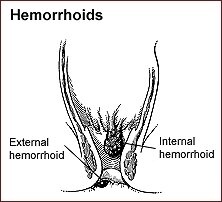
Swollen and inflamed blood vessels in and around the anus and lower rectum. Continual straining to have a bowel movement causes them to stretch and swell. They cause itching, pain, and sometimes bleeding. More about Constipation and Hemorrhoids
Hepatitis
Pronounced - heh-puh-TY-tis
Irritation of the liver that sometimes causes permanent damage. Hepatitis may be caused by viruses or by medicines or alcohol. Hepatitis has the following forms: Autoimmune Hepatitis, Hepatitis A, Hepatitis B, Hepatitis C, Hepatitis D - Delta Agent, and Hepatitis E. More about Hepatitis.
Hernia
Pronounced - HUR-nee-uh
Hernia: The part of an internal organ that pushes through an opening in the organ's wall. Most hernias occur in the abdominal area.
Hiatal Hernia (Hiatus Hernia)
Pronounced - hy-AY-tul HUR-nee-uh
A small opening in the diaphragm that allows the upper part of the stomach to move up into the chest. Causes heartburn from stomach acid flowing back up through the opening.

Hirschsprung Disease
Pronounced - HURSH-sprung
Hirschsprung disease, or HD, is a disease of the large intestine. HD usually occurs in children. It causes constipation, which means that bowel movements are difficult. Some children with HD can't have bowel movements at all. The stool creates a blockage in the intestine. More about Hirschsprung Disease
Human Leukocyte Antigen (HLA)
Antigens, tolerated by the body, that correspond to genes that govern immune responses. Also known as major histocompatibility complex.
Hydrochloric Acid (HCl)
Pronounced - hy-droh-KLOR-ik ASS-id
An acid made in the stomach. Hydrochloric acid works with pepsin and other enzymes to break down proteins.
Hydrogen Peroxide
A chemical used in bleaches, dyes, cleansers, antiseptics, and disinfectants. In a concentrated form, it is toxic and irritating to tissues.
Hyperbilirubinemia
Pronounced - HY-pur-bil-ee-roo-buh-NEE-mee-uh
Hyperbilirubinemia is too much bilirubin in the blood. Symptoms include jaundice. This condition occurs when the liver does not work normally.
Hypercalcemia
Pronounced - HY-per-kal-SEE-mee-uh
Abnormally high amount of calcium in the blood.
Hyperthyroidism (overactive thyroid)
Pronounced - HY-per-THY-ROY-dih-zum
When too much thyroid hormone is made, it is called overactive thyroid or hyperthyroidism. Symptoms include weight loss, chest pain, cramps, diarrhea, and nervousness.
Hypopharynx
The hypopharynx is the bottom part of the pharynx and is the part of the throat that connects to the esophagus.
Hypothyroidism (underactive thyroid)
Pronounced - HY-poh-THY-ROY-dih-zum
When not enough thyroid hormone is made, it is called underactive thyroid or hypothyroidism. Symptoms include weight gain, constipation, dry skin, and sensitivity to the cold.
Back To Top
|