NexiumResearch


Digestive System
Digestive System
Digestive System Facts
Myths & Facts

Constipation
Constipation
Causes of Constipation
Fiber & Constipation
Child Constipation
Constipation & IBS
Constipation & Medication
Constipation & Hemorrhoids
Constipation & Certain Diseases
Constipation Remedy

Diarrhea
What is Diarrhea?
Causes of Diarrhea
Symptoms of Diarrhea
Diarrhea in Children
Diarrhea & Dehydration
When Should a Doctor be Consulted?
How is the Cause of Diarrhea Diagnosed?
Treatment of Diarrhea
Preventing Traveler's Diarrhea
Hope Through Research
More Information


Fiber
High Fiber Food
High Fiber Food List
Are You Getting Enough Fiber?
When Nature Doesn't Call

Flatulence
Why Do I have Gas?
Cause Of Flatulence
Food That Cause Flatulence
What Can I Do About Flatulence?

Miscellaneous
Amyloidosis
Ataxia
Barrett's Esophagus
Celiac Disease
Cirrhosis Of The Liver
Crohn's Disease
Diabetes
Diverticulosis
Esophageal Cancer
Esophagitis
Intestinal Pseudo-Obstruction
Lupus
Lyme Disease
Multiple Sclerosis (MS)
Scleroderma
Sjogren's Syndrome
Upper Endoscopy
Upper GI Series

Ulcers
Ulcers
Causes of Ulcers
Symptoms of Ulcers
Treatment of Ulcers
Ulcers & NSAIDs

Definitions
Definitions A - Z

Copyright & Disclaimer
© Nexiumresearch.com
2004/2008

Barrett's Esophagus

Page 1
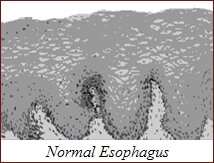
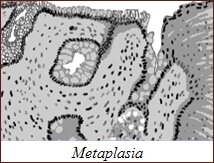
Barrett's esophagus is a condition in which the esophagus, the muscular tube that carries food and saliva from the mouth to the stomach, changes so that some of its lining is replaced by a type of tissue similar to that normally found in the intestine. This process is called intestinal metaplasia.

While Barrett's esophagus may cause no symptoms itself, a small number of people with this condition develop a relatively rare but often deadly type of cancer of the esophagus called esophageal adenocarcinoma. Barrett's esophagus is estimated to affect about 700,000 adults in the United States. It is associated with the very common condition gastroesophageal reflux disease or GERD.


Normal Function of the Esophagus
The esophagus seems to have only one important function in the body--to carry food, liquids, and saliva from the mouth to the stomach. The stomach then acts as a container to start digestion and pump food and liquids into the intestines in a controlled process. Food can then be properly digested over time, and nutrients can be absorbed by the intestines.

The esophagus transports food to the stomach by coordinated contractions of its muscular lining. This process is automatic and people are usually not aware of it. Many people have felt their esophagus when they swallow something too large, try to eat too quickly, or drink very hot or very cold liquids. They then feel the movement of the food or drink down the esophagus into the stomach, which may be an uncomfortable sensation.

Drawing of the Digestive Tract
Digestive tract

Page 1 Barrett's Esophagus
Page 2 Barrett's Esophagus
Page 3 Barrett's Esophagus
Page 4 Barrett's Esophagus
Page 5 Barrett's Esophagus
Page 6 Barrett's Esophagus - Conclusion

Proton Pump Inhibitors
Nexium - Esomeprazole
Aciphex - Rabeprazole
Prevacid - Lansoprazole
Prilosec - Omeprazole
Prilosec OCT
Protonix - Pantoprazole

GastroEsophageal Reflux Disease
GERD
Causes of GERD
Diet for GERD
Infant GERD
Children 1 - 11 Years Old
Medication for GERD
Symptoms of GERD
GERD Surgery
GERD Treatment

Heartburn
Heartburn
Causes of Heartburn
Symptoms of Heartburn
Heartburn Medications
Heartburn Remedy

Articles
Can Flatulence Be Controlled
Lump In Throat
Proton Pump Inhibitors
Remedies for GERD

Partners
Acne
Hair Removal
HGH
Nexiumresearch.com Supporters Home | Definitions | Bookmark | Site Map